Eternal Songs
tu. 15-12-2026, 19:00
Symphonic concert
Symphony Hall
Symphonic concert
Symphony Hall
Szczecin Philharmonic Symphony Orchestra
Przemysław Neumann – conductor
Heinrich Urban – The Pied Piper of Hamelin, Op. 25
Mieczysław Karłowicz – Serenade for string orchestra Op. 2
Mieczysław Karłowicz – The Eternal Songs Op. 10
Przemysław Neumann – conductor
Heinrich Urban – The Pied Piper of Hamelin, Op. 25
Mieczysław Karłowicz – Serenade for string orchestra Op. 2
Mieczysław Karłowicz – The Eternal Songs Op. 10
The more we mature, the more deeply we look within ourselves. The music of Mieczysław Karłowicz clearly reflects such a journey – from music still focused on form and beauty of sound to music that becomes a record of inner experiences, emotions, and questions. The pairing of Serenade for Strings and Eternal Songs allows us to hear this transformation with exceptional clarity.
Serenade for String Orchestra, Op. 2, composed in 1897, belongs to Karłowicz’s youthful creative period. It is elegant and transparent music, structured in four movements and featuring distinct dance elements. The march, the lyrical Romance, the graceful waltz, and the lively finale delight with their lightness and natural charm. In this work, the composer demonstrates his sensitivity to sound and form, yet he remains close to the external world – the world of style and gesture.
In Eternal Songs, Op. 10, this perspective changes fundamentally. The three movements – Song of Eternal Longing, Song of Love and Death, and Song of the Universal Being-lead us into experiences that recur throughout Karłowicz’s oeuvre: longing, love, the search for solace, and the quest for meaning. The composer portrays emotions and states that unfold within the human soul. The rich and colourful orchestration becomes a means of expressing what is difficult to put into words.
The premiere of Eternal Songs on 22 January 1909 brought Karłowicz tremendous success and, for the first time, clearly confirmed his position as one of the most important composers of his generation. It was a moment of full recognition and artistic fulfilment, heralding further development of his creative path. Just over two weeks later, on 8 February 1909, the thirty-two-year-old composer was killed in an avalanche in the Tatra Mountains.
The pairing of these two works therefore reveals not only the development of a musical style, but above all the journey of a human being – from what is still external and shaped by form to what is deepest and most personal.
To begin, a real musical treat: a story known to almost everyone. Rats overrun Hamelin, and the desperate townspeople turn to a mysterious piper for help. Using music, he leads the plague out of the town, but when the time comes to pay him, the townspeople break their promise. The Pied Piper returns once more – but this time, it is not the rats but the children who follow his melody. Heinrich Urban drew on this dark legend in Der Rattenfänger von Hameln, Op. 25. It is no coincidence that this work opens a concert devoted to Karłowicz. Urban was his composition teacher during his studies in Berlin, and The Pied Piper of Hamelin reveals a composer fascinated by musical narrative – by the possibility of telling a story using nothing but an orchestra. Before we hear two works by the pupil, we will therefore encounter his teacher and one of the musical worlds from which the later symphonic composer Karłowicz emerged.
Listen to selected excerpts from the concert programme:
Serenade for String Orchestra, Op. 2, composed in 1897, belongs to Karłowicz’s youthful creative period. It is elegant and transparent music, structured in four movements and featuring distinct dance elements. The march, the lyrical Romance, the graceful waltz, and the lively finale delight with their lightness and natural charm. In this work, the composer demonstrates his sensitivity to sound and form, yet he remains close to the external world – the world of style and gesture.
In Eternal Songs, Op. 10, this perspective changes fundamentally. The three movements – Song of Eternal Longing, Song of Love and Death, and Song of the Universal Being-lead us into experiences that recur throughout Karłowicz’s oeuvre: longing, love, the search for solace, and the quest for meaning. The composer portrays emotions and states that unfold within the human soul. The rich and colourful orchestration becomes a means of expressing what is difficult to put into words.
The premiere of Eternal Songs on 22 January 1909 brought Karłowicz tremendous success and, for the first time, clearly confirmed his position as one of the most important composers of his generation. It was a moment of full recognition and artistic fulfilment, heralding further development of his creative path. Just over two weeks later, on 8 February 1909, the thirty-two-year-old composer was killed in an avalanche in the Tatra Mountains.
The pairing of these two works therefore reveals not only the development of a musical style, but above all the journey of a human being – from what is still external and shaped by form to what is deepest and most personal.
To begin, a real musical treat: a story known to almost everyone. Rats overrun Hamelin, and the desperate townspeople turn to a mysterious piper for help. Using music, he leads the plague out of the town, but when the time comes to pay him, the townspeople break their promise. The Pied Piper returns once more – but this time, it is not the rats but the children who follow his melody. Heinrich Urban drew on this dark legend in Der Rattenfänger von Hameln, Op. 25. It is no coincidence that this work opens a concert devoted to Karłowicz. Urban was his composition teacher during his studies in Berlin, and The Pied Piper of Hamelin reveals a composer fascinated by musical narrative – by the possibility of telling a story using nothing but an orchestra. Before we hear two works by the pupil, we will therefore encounter his teacher and one of the musical worlds from which the later symphonic composer Karłowicz emerged.
Listen to selected excerpts from the concert programme:
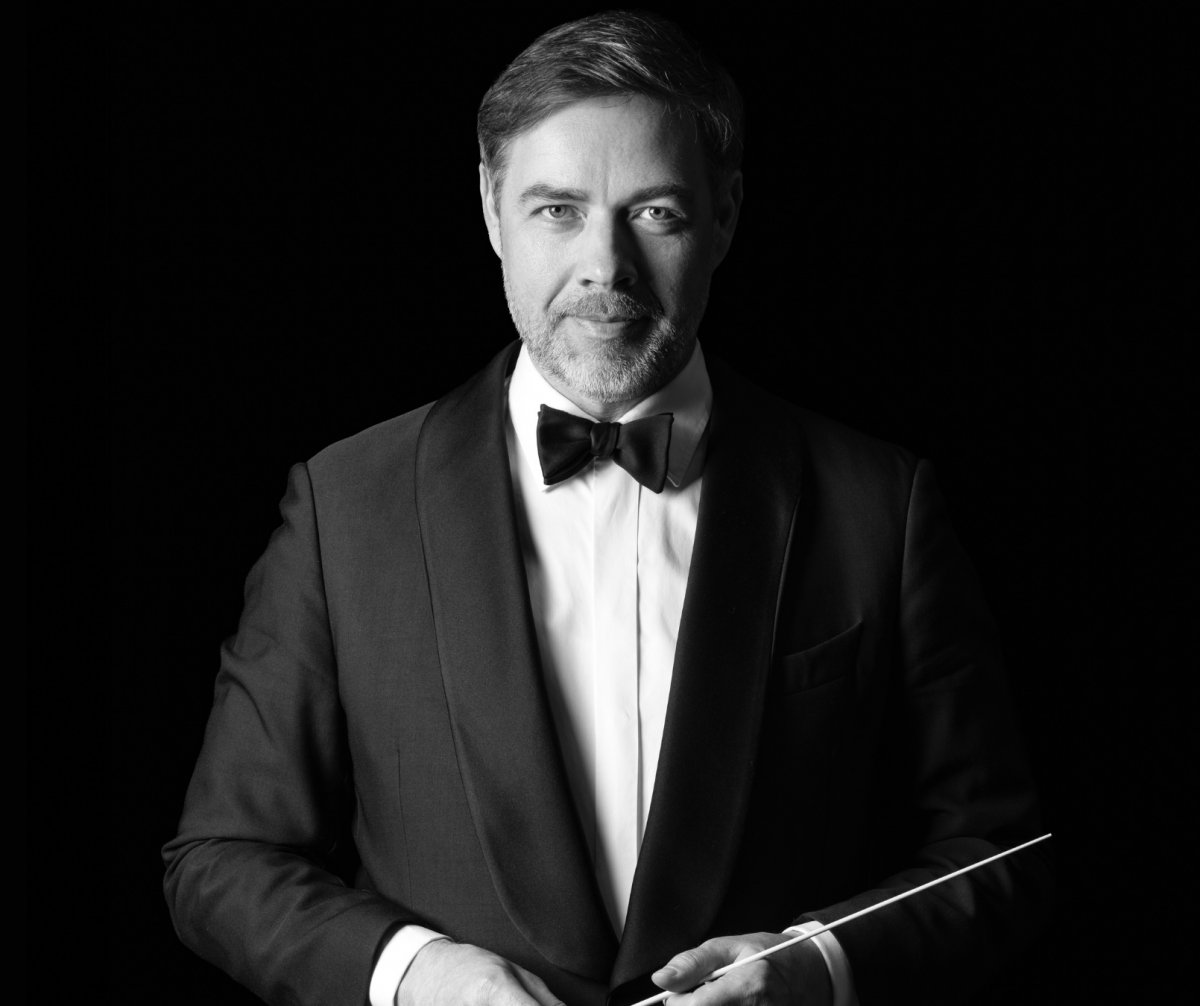
Przemysław Neumann
dyrygent
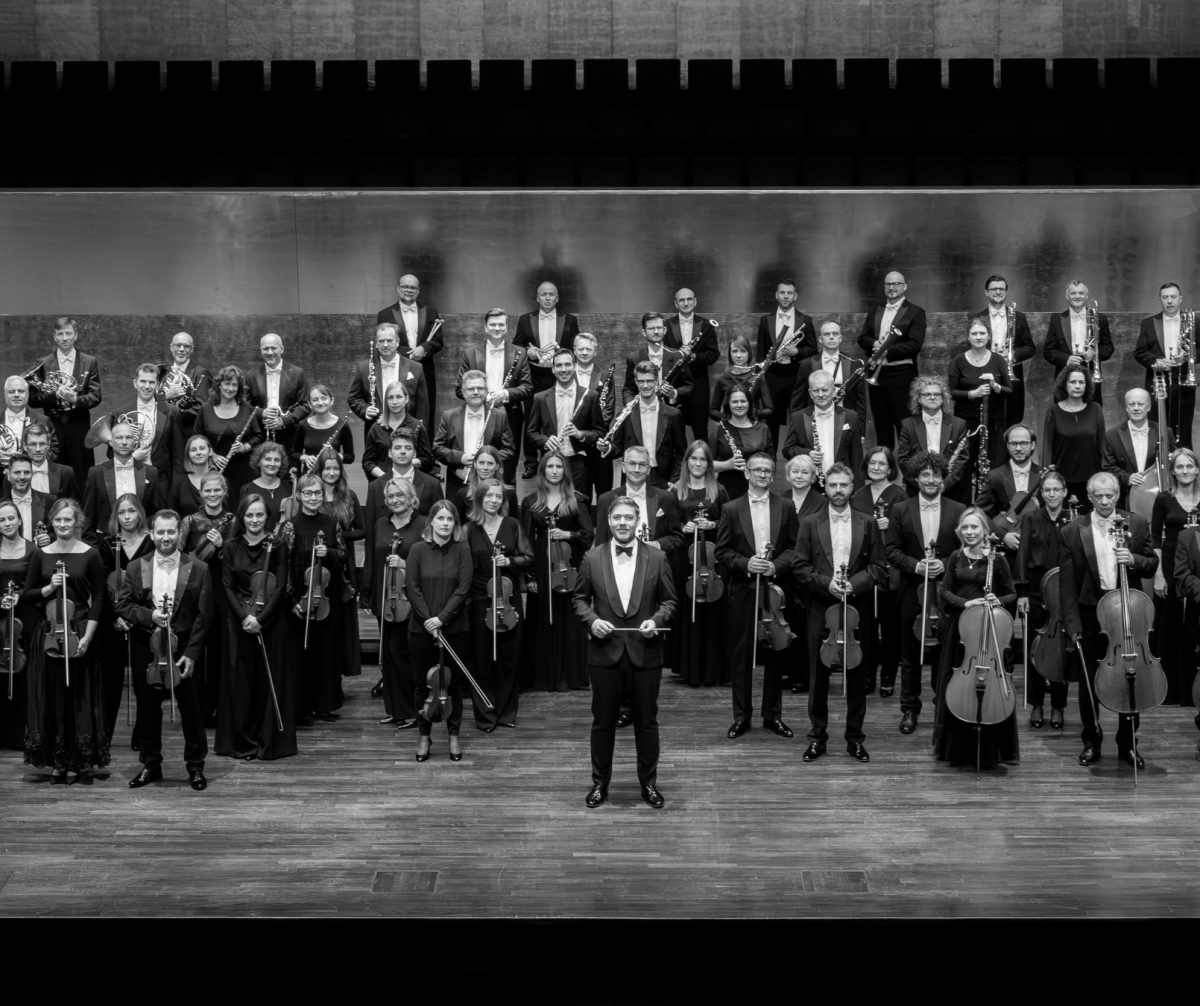
Orkiestra Symfoniczna Filharmonii w Szczecinie